Cloudmin is for managing VMs. The upcoming Cloudmin 10 uses libvirt to do so. (Cloudmin 9 uses our own in-house libraries and qemu CLI, as libvirt didn’t exist when Cloudmin started.)
Cloudmin 9 is pretty difficult to install and use on modern OSes, so I’d recommend you wait a few days for the beta of Cloudmin 10, or wait a bit longer for the production release.
do you think would it be possible in future to have just a small simple webmin module to manage just one localhost and few VMs without the need to install the whole Cloudmin ?
I have just one physical (local) host at home with a couple of VMs for study purposes.
and I was asking if there will be a simple small webmin module to manage them via a web GUI.
Just install the virtualmin module within webmin and use that, or if that is too ‘heavy’ learn to use the webmin modules that are present, this assumes that VM’s = domains. If VM’s mean 2 instances of webmin/virtualmin running why no use the webmin cluster functions after you have setup webmin servers index with your instances. Your post does not make your intentions clear
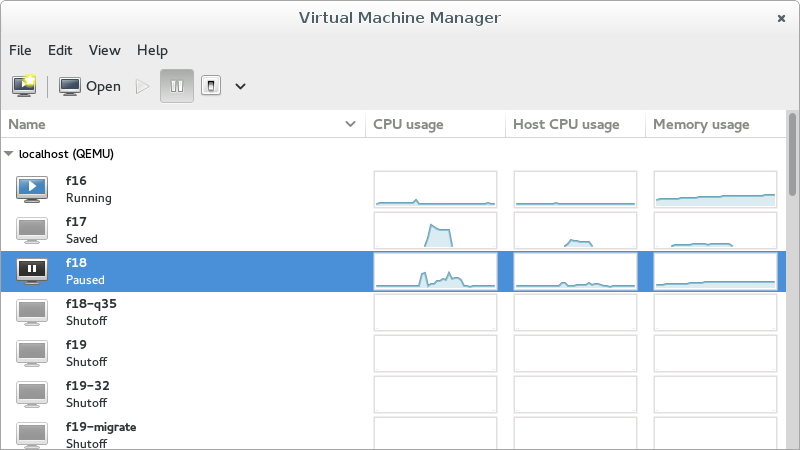
From what I can see from your screen shot you have some virtual device management already running meaning that virtualmin is installed on device f18 ? If so how do you expect virtualmin to control anything if that device is either paused or turned off. If virtualmin/webmin is installed on f18’s host virtualmin is not abke to managee f18 because it’s not designed to manage virtual machines only virtual servers. As this is a home lab situation I would continue to use the software you are using, please confirm either way
You’re describing Cloudmin (at least, the new one). The previous versions got lost in the weeds, with a quite complex installation and such. That’s being corrected by Cloudmin 10.
Cloudmin Pro will also manage a bunch of host systems and larger scale VM hosting, but Cloudmin GPL 10 will be a simple to install and use way to manage VMs on a single host machine in Webmin.